
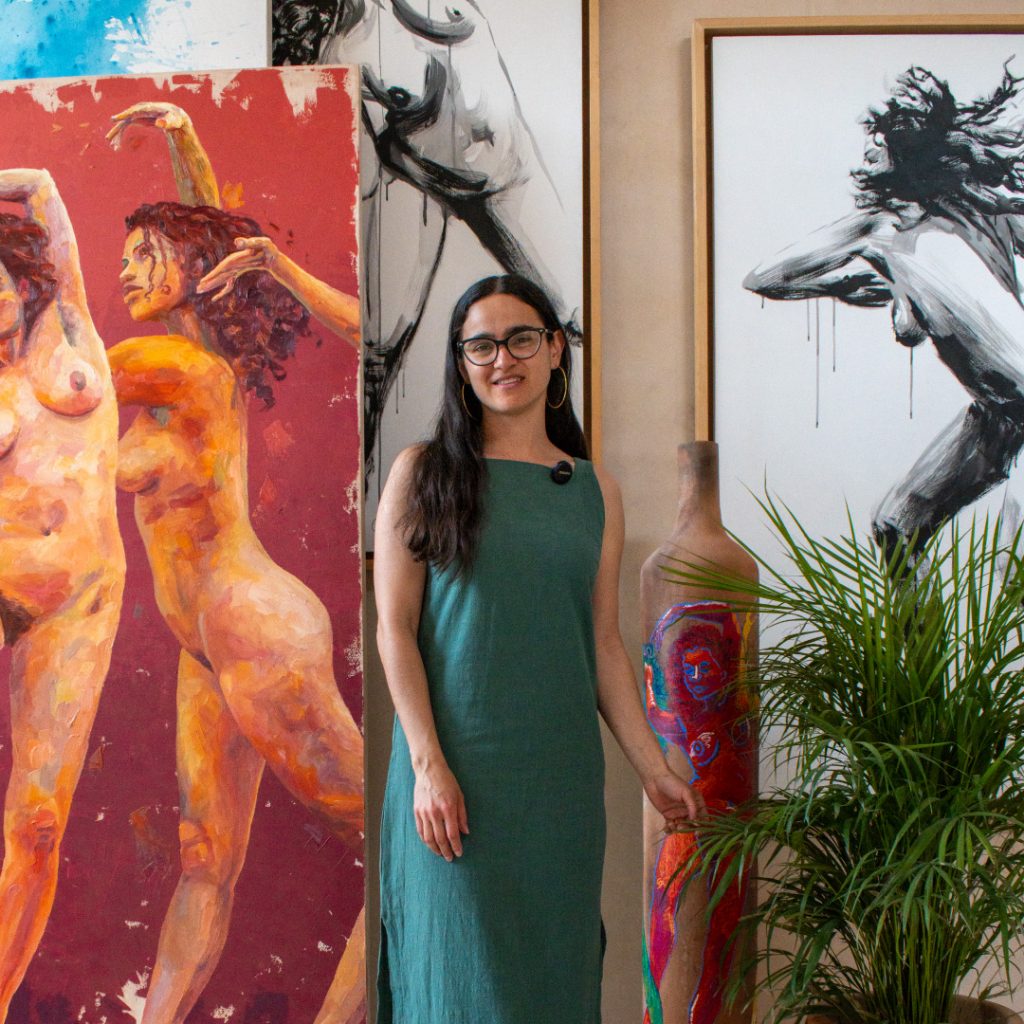

By Pamela Fink
For Ana Raga Living consists of inhabiting contradiction and the chiaroscuro through which we constantly navigate, a constant part of the work of the artist from Jalisco who resides in San Miguel.
For the painter, when she puts her work into color, she divides the dyes she will use into a kind of puzzle, proceeding to paint with natural light series such as "Light and Shadow" that speak precisely of this duality that inhabits human beings with a particular focus on gender stereotypes, contrasting the living being that we are against what is expected of us for having been born men or women.
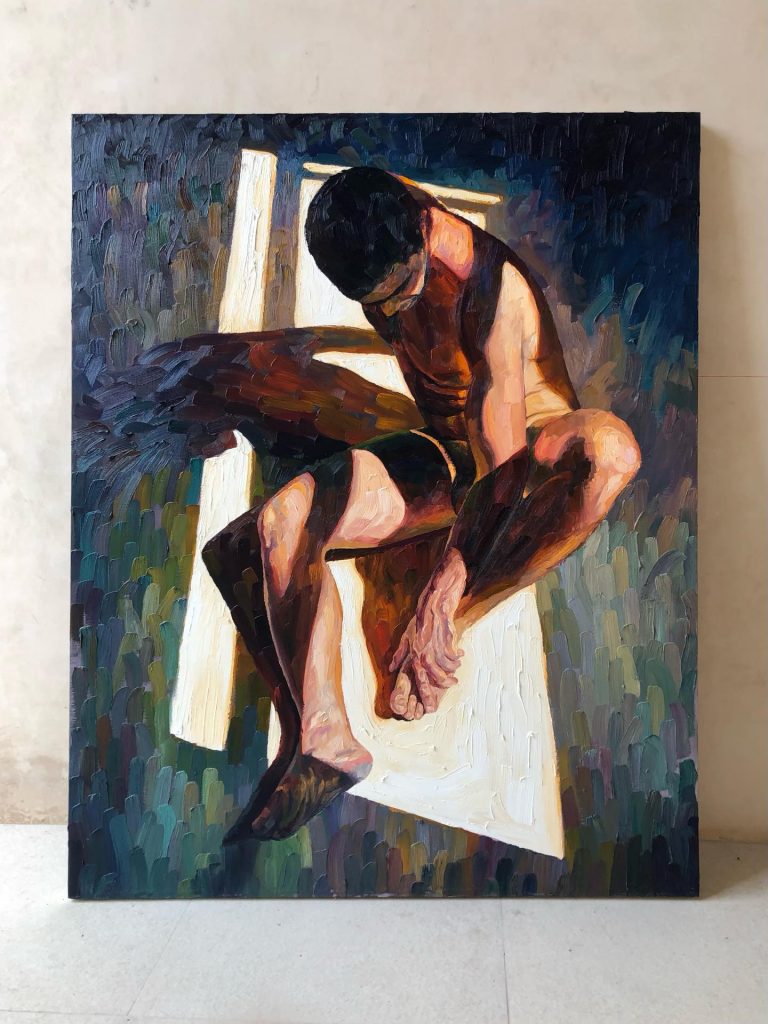
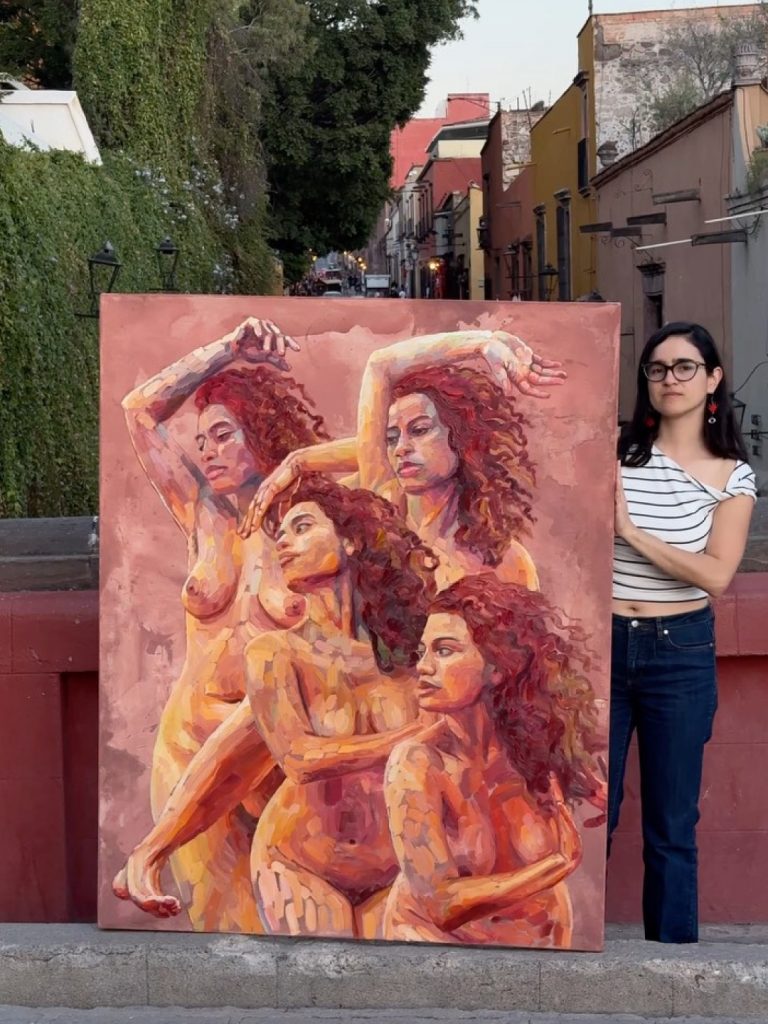
And these same gender stereotypes, such as calling women "lunatics" in an offensive way, trying to reduce the female gender to madness, are challenges that the artist takes on to reclaim the meaning of the word and give it a positive meaning by saying that yes, we are crazy and that we do things differently in our own way despite the oppressive nature of the patriarchal system.
A clear example of this thesis can be seen in the chapel where the artist is painting the murals, the same one from which she took as inspiration the poem of Saint Francis of Assisi known as "The Canticle of the Creatures" in which he speaks of the 4 elements.
For the element of “Water”, Ana takes the biblical passage of The Washing of the Feet with the peculiarity that it shows Jesus washing the foot of one of his disciples but also shows Mary Magdalene drying his feet, implying that she was the one who received the attention of the Messiah in the first instance, thus reassigning the role of women in that time, giving them great importance.
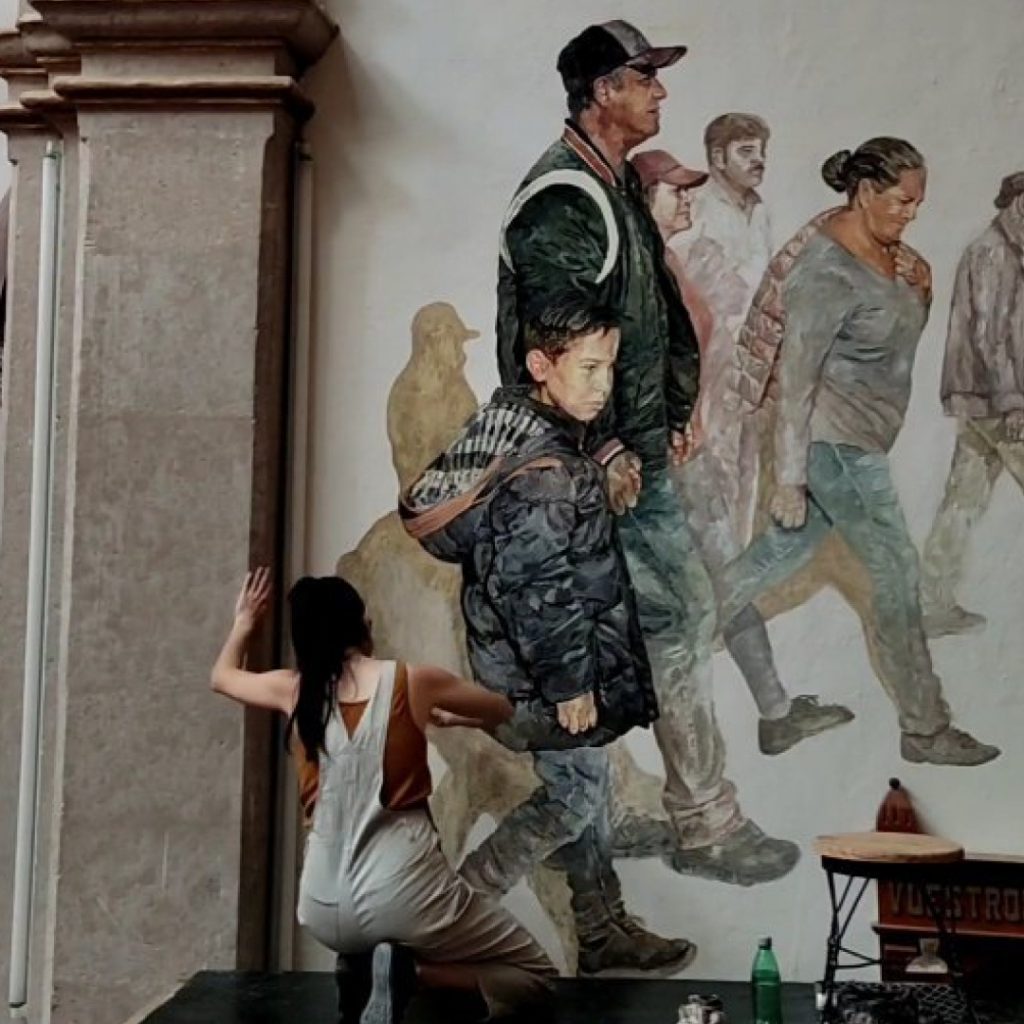
For the element of “Air” the artist portrayed a caravan of migrants, which, although initially scandalous in the chapel, gained better understanding from the parishioners when, right in front, she portrayed the Holy Family in their procession to Egypt when they had to flee.
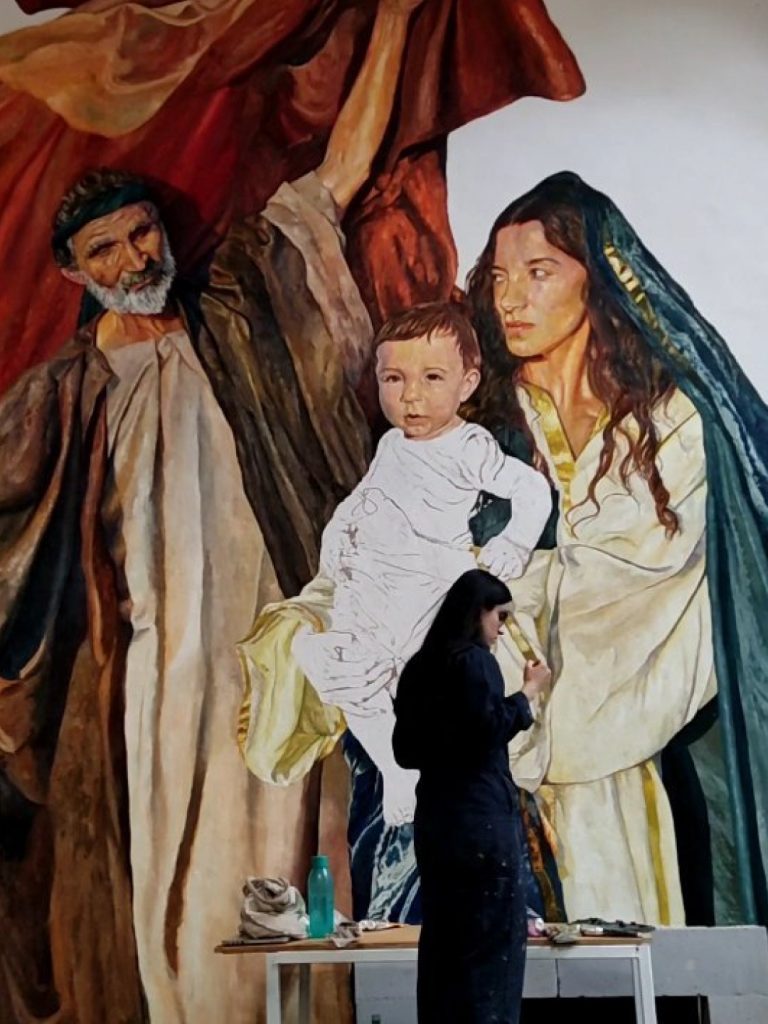
This direct comparison makes us reflect on the fact that even Jesus, Mary, and Joseph themselves had to leave their home and seek a new place where they could live in better conditions, thus humanizing the invisible migrants and the struggle they face every day.
Painting in San Miguel For the artist, it holds great significance because, in addition to loving the natural light of our paradise, she finds the ideal rhythm to work on her artistic creation, as it is slow enough to allow for moments of introspection and reflection, and also features waves of artistic events or happenings that keep her moving and inspired, thus achieving the right balance.
IN @ana.raga